Thursday, November 19, 2009

APES Web Activity


1) a. World Pop. 6960718920
b. World Pop at my birth. 5383169361
c. Percent Change. 29.31%

2) US Pop. 307,962,040
COMPONENT SETTINGS FOR NOVEMBER 2009 One birth every.................................. 7 seconds One death every.................................. 12 seconds One international migrant (net) every............ 35 seconds Net gain of one person every..................... 11 seconds
3) Top 3 Most Populous Countries:
China: 1,338,612,968
India: 1,166,079,217
United States: 307,212,123
4) Chad 2000:
TFR: 6.6

Infant Mortality Rate: 113

Life Expectancy: 46
Growth Rate: 2.9%
Chad 2025:
TFR: 3.6
Infant Mortality Rate: 73
Life Expectancy:54
Growth Rate: 1.7%
Chad 2050:
TFR: 3.0
Infant Mortality Rate: 39
Life Expectancy: 63
Growth Rate: 1.5%


4) b. Puerto Rico 2000:
TFR: 2.0
Infant Mortality Rate: 10
Life Expectancy: 76
Growth Rate: 0.7%
Puerto Rico 2025:
TFR: 1.7
Infant Mortality Rate: 6
Life Expectancy: 81
Growth Rate: 0.0%
Puerto Rico 2050:
TFR: 1.7
Infant Mortality Rate: 4
Life Expectancy: 83
Growth Rate: -0.7%

5)
Total Fertility Rate in China is rapidly decreasing due to the one child policy.

6) Site: http://countrystudies.us/india/34.htm
Facts about India’s Family Planning:
- In the 1950’s, birth control information was available in hospitals.
- National Population Policy was adopted in 1976
- Family planning was a part of this larger goal to improve general welfare
- The population problem was taught in schools
- The many programs implemented in India did help but they could not stop the growth due to the large momentum that it had.

7) Ecological Footprint: measure humanity’s demands on nature.
= 5.37 Earths

Thursday, November 12, 2009

Quarter 1 Article 10


2) Koalas 'could face extinction'


3) BBC News, Nov. 10th, 2009

5) Miller Chapter: 1, 8, 11


6) Regional: East and South Australia


7) According to researchers, the koala is on a fast path towards extinction due to a number of factors in Australia. These factors include development, climate change, brush fires, and chlamydia. In the koalas habitats there has recently been hotter and drier conditions which has hurt the nutritional value of their staple food, eucalyptus leaves. The eucalyptus leaves are very sensitive and koalas are very picky eaters which is not a very good mix. Scientists hope that these findings will persuade the Threatened Species Steering Committee to put the koala on the threatened species list.


8) I think that it is very surprising to read about the data found in the forests of Australia. In only a couple of years the koala numbers have plummetted and the reaction time of the support organizations may be to slow to help the koalas in time.


9) Australian Koala Foundation :(AKF) is an international not-for-profit scientific organisation that aims to diminish the threats to the survival of koalas and in doing so raise the awareness of the global community to help save endangered fauna and flora.

Quarter 1 Article 9


3) Roger Greenway, ENN
November 12, 2009


5) Miller Chapter: 1,8,11


6) National: USA


7) Recently, Secretary of the Interior, Assistant Secretary for Fish and Wildlife and Parks, and the director of the U.S. Fish and Wildlife Service announced that the brown pelican has recovered and will be taken off the endangered species list. The brown pelican was put on the endangered species list after the pesticide DDT decimated their population around 1970. DDT was not the only factor, they also suffered from habitat loss and being hunted for its feathers although their comeback is largely due to the ban of this harmful pesticide.
8) I think it is great that the brown pelican has had such a strong comeback. I'm glad that people realized the problem and did something to fix it and help the pelicans. This proves that help from many different individuals, businesses, and organizations can help a very important cause.
9)DDT: dichlorodiphenyltrichloroethane is one of the most well-known synthetic pesticides.


Friday, November 6, 2009

Quarter 1 Article 8


2) Degraded Habitats Push More Species to Extinction Worldwatch Institute

3) World Watch Institute
11/3/2009

5) Miller Chapter: 1, 8, 11

6) Global

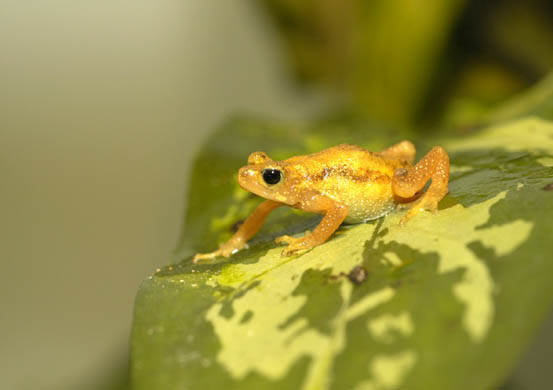
7) Recently, a global survey was done on biodiversity and the species across the globe. The International Union for the Conservation of Nature found that 17,291 species are threatened with extinction and 11 species are either fully extinct or extinct out of captivity. These findings were out of 47,677 species across the earth. Annually, these numbers indicate how environmental change is altering natural habitats everywhere. To try and reverse the effects of environmental change, the Wildlife Conservation Society has been starting many breeding programs for endangered species. Some of these programs are happening right in our backyard; in the Bronx Zoo, they are currently working on breeding the Kihansi spray toad. Another example of a newly endangered and maybe extinct species is the French Polynesia Snail; it became extinct because of an intrusive species, the African giant land snail.

8) I was very surprised to read that so many species become extinct and endangered each year. It was also interesting to see that things we learn in class are really applied to the environment we live in; for example, the intrusive species in the Pacific Islands that wiped out several other snail species.

9) Wildlife Conservation Society: The Wildlife Conservation Society (WCS) endeavors to save wildlife and wild lands though careful use of science, conservation around the world

Thursday, November 5, 2009

quarter 1 article 7


3) Source: University of Rochester

Nov. 2, 2009

5)Miller Chapter: 14


6)Regional: Ethiopia


7) In 2005, a gigantic rift opened up in the desert of Ethiopia that was 35 miles long. There is a volcanic process going on underneath the rift, similar to the volcanic processes going on under earth's oceans. This leads scientists to believe that the rift is the start of a new ocean. They predict that the edges will suddenly break off in large chunks rather than gradually due to the highly active volcanic boundaries. One scientist figured out that the eruption of a nearby volcano triggered the "unzipping" of the rift by forced lava up through the earth. His research showed that the 35 mile opening happened in days which is incredible. This phenomenon will let scientists into the incredible magma system and the rifts it causes not only on land but also in the ocean.
8) I think that this event that has taken place in Ethiopia is amazing. It really is crazy how a 35 mile long hole can open up in just days. Scientists have always known about rifts and their size under the ocean but this occurrance let them know how it happens and how fast it can develop. I think it will be interesting to see how the events unfold and if this rift will become a new ocean.
9) Rift: place where the Earth's crust and lithosphere are being pulled apart.