Thursday, December 17, 2009
Quarter 2 Article 3

Wednesday, December 9, 2009
Quarter 2 Article 2
Quarter 2 Article 1
NRDC: Press Release - Killing Carp: Chicago Canal Poisoned to Keep Invasive Fish Out of Great Lakes
3) nrdc.org Dec. 2, 2009
5) Miller Chapter 11
6) Regional Area: Chicago Sanitary Ship Canal and Lake Michigan
7) Lake Michigan's ecosystem is already extremely damaged by the introduction of many invasive species. This is due to the canals that took the lake out of isolation and linked the lake with other water ways. The largest problem that is being faced right now is the Asian Carp. This fish is on its way towards Lake Michigan and it poses a big threat to the already hurt ecosystem. The Carp reproduces rapidly, filter feeds 40% of their body weight each day, and may eventually out-compete native species. To stop this, state and federal agencies have begun to poison the Chicago Sanitary Ship Canal to prevent the carp from entering the lake while maintenance is performed on an electrical barrier intended to keep the fish out.
8) I think that this is a good idea because the asian carp could be detrimental to the lake Michigan ecosystem. The poison may not be a good idea because the poison may travel down or up stream and even into the lake; but the electrical barrier is something that wont harm a lot of the aquatic life in the area.
9)Chicago Sanitary Ship Canal: The Chicago Sanitary and Ship Canal, historically known as the Chicago Drainage Canal, is the only shipping link between the Great Lakes (specifically Lake Michigan by way of the Chicago River) and the Mississippi River system, by way of the Illinois and Des Plaines Rivers.
Tuesday, December 8, 2009
Thursday, November 19, 2009
APES Web Activity


b. World Pop at my birth. 5383169361
c. Percent Change. 29.31%
2) US Pop. 307,962,040
COMPONENT SETTINGS FOR NOVEMBER 2009 One birth every.................................. 7 seconds One death every.................................. 12 seconds One international migrant (net) every............ 35 seconds Net gain of one person every..................... 11 seconds
3) Top 3 Most Populous Countries:
China: 1,338,612,968

India: 1,166,079,217
United States: 307,212,123
4) Chad 2000:
TFR: 6.6
Growth Rate: 2.9%
Chad 2025:
TFR: 3.6
Infant Mortality Rate: 73
Life Expectancy:54
Growth Rate: 1.7%
Chad 2050:
TFR: 3.0
Infant Mortality Rate: 39
Life Expectancy: 63
Growth Rate: 1.5%

4) b. Puerto Rico 2000:
TFR: 2.0
Infant Mortality Rate: 10
Life Expectancy: 76
Growth Rate: 0.7%
Puerto Rico 2025:
TFR: 1.7
Infant Mortality Rate: 6
Life Expectancy: 81
Growth Rate: 0.0%
Puerto Rico 2050:
TFR: 1.7
Infant Mortality Rate: 4
Life Expectancy: 83

Growth Rate: -0.7%
5)
Total Fertility Rate in China is rapidly decreasing due to the one child policy.
Facts about India’s Family Planning:
- In the 1950’s, birth control information was available in hospitals.
- National Population Policy was adopted in 1976
- Family planning was a part of this larger goal to improve general welfare
- The population problem was taught in schools
- The many programs implemented in India did help but they could not stop the growth due to the large momentum that it had.
7) Ecological Footprint: measure humanity’s demands on nature.
= 5.37 Earths
Thursday, November 12, 2009
Quarter 1 Article 10
2) Koalas 'could face extinction'
3) BBC News, Nov. 10th, 2009
5) Miller Chapter: 1, 8, 11
6) Regional: East and South Australia
7) According to researchers, the koala is on a fast path towards extinction due to a number of factors in Australia. These factors include development, climate change, brush fires, and chlamydia. In the koalas habitats there has recently been hotter and drier conditions which has hurt the nutritional value of their staple food, eucalyptus leaves. The eucalyptus leaves are very sensitive and koalas are very picky eaters which is not a very good mix. Scientists hope that these findings will persuade the Threatened Species Steering Committee to put the koala on the threatened species list.
8) I think that it is very surprising to read about the data found in the forests of Australia. In only a couple of years the koala numbers have plummetted and the reaction time of the support organizations may be to slow to help the koalas in time.
9) Australian Koala Foundation :(AKF) is an international not-for-profit scientific organisation that aims to diminish the threats to the survival of koalas and in doing so raise the awareness of the global community to help save endangered fauna and flora.
Quarter 1 Article 9

November 12, 2009
Friday, November 6, 2009
Quarter 1 Article 8
2) Degraded Habitats Push More Species to Extinction Worldwatch Institute
3) World Watch Institute
11/3/2009
5) Miller Chapter: 1, 8, 11
6) Global
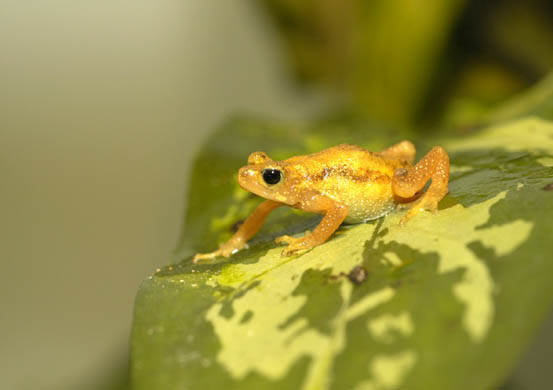
7) Recently, a global survey was done on biodiversity and the species across the globe. The International Union for the Conservation of Nature found that 17,291 species are threatened with extinction and 11 species are either fully extinct or extinct out of captivity. These findings were out of 47,677 species across the earth. Annually, these numbers indicate how environmental change is altering natural habitats everywhere. To try and reverse the effects of environmental change, the Wildlife Conservation Society has been starting many breeding programs for endangered species. Some of these programs are happening right in our backyard; in the Bronx Zoo, they are currently working on breeding the Kihansi spray toad. Another example of a newly endangered and maybe extinct species is the French Polynesia Snail; it became extinct because of an intrusive species, the African giant land snail.
8) I was very surprised to read that so many species become extinct and endangered each year. It was also interesting to see that things we learn in class are really applied to the environment we live in; for example, the intrusive species in the Pacific Islands that wiped out several other snail species.
9) Wildlife Conservation Society: The Wildlife Conservation Society (WCS) endeavors to save wildlife and wild lands though careful use of science, conservation around the world
Thursday, November 5, 2009
quarter 1 article 7

Friday, October 30, 2009
Quarter 1 Article 6

Wednesday, October 28, 2009
quarter 1 article 5

Monday, October 26, 2009
Quarter 1 Article 4

Thursday, October 8, 2009
Quarter 1 Article 3

2)Green Roofs Shown to Offset Warming: Discovery News
Posted using ShareThis
3) Discovery News
October 6, 2009
5) Ch. 19, 20
6)Global
7) One of the most recent attacks proposed to fight the problem of global warming is filling rooftops with soil and plants. Naturally, you associate plants with taking in carbon dioxide which would be the main goal but the green roofs carry many other added benefits. These include absorbing and reflecting heat in the summer, acting as insulation in the winter, and soaking up rainwater to prevent flooding. These green roof tops would also reduce air pollution, noise pollution, and provide a habitat for some animals. All of these benefits last a long time except for removing carbon from the atmosphere. This does not last because the carbon emitted from the soil after matter is decayed balances out the carbon taken from the atmosphere by the plants in about 2 years. Although this seems to be a short amount of time, the results would make the project worthwhile.
8) I think that having green roof tops in the cities would be a really great idea because of all the major benefits it seems to hold. There is so much roof space in the cities across the world, it would be foolish not to put them to good use.
9) plant biomass: plant matter grown to produce electricity or heat
Tuesday, September 29, 2009
Quarter1 Article2
Quarter1 Article1
1) Quarter 1 Article 1
2) Climate Change Mitigation Strategies Ignore Carbon Cycling Processes Of Inland Waters, Scientists Say
Shared via AddThis
3) ScienceDaily: Sep. 27, 2009
4)--------------->
5) Chapter 3
6) International
7) Scientists have recently found that a critical player in carbon emissions and climate change has been unaccounted for in common carbon cycling models. In many carbon cycle models, inland waters such as streams, rivers, lakes, and wetlands are only static roadways that transfer carbon from continents to oceans. In reality, the outgassing of respired carbon from rivers contributes the equivalent of 13% of annual fossil fuel burning. These findings were not accounted for in the "Kyoto Protocol" and this may lead countries to decide on a new climate agreement in 2012. The solution to the carbon cyle model problem is a "Boundless Carbon Cycle" which shows carbon transfers between the land-freshwater boundary, the freshwater-atmosphere boundary, and regional boundaries within continents.
8) I find this article very interesting because not many people would think inland waters would have such a profound effect on the atmosphere due to the small amount of area it takes up on earth's surface. This new data will definitely move scientists and policy makers in the right direction when it comes to protecting the environment and it's atmosphere.
9) Kyoto Protocol: an international agreement linked to the United Nations Framework Convention on Climate Change. The major feature of the Kyoto Protocol is that it sets binding targets for 37 industrialized countries and the European community for reducing greenhouse gas (GHG) emissions.